
If I were heading out the door to spend a summer day scampering in mountains like the Tetons, the Black Diamond Technician Pro approach shoes would be the first kicks to go on my feet.
While the Tetons typically feature easier technical grades, the length and complexity of the routes test an alpinist’s ability to move light and fast. One moment you’re on a faint trail through loose talus, then perhaps some firm snow, or even a glacier with a bergschrund, and then you’re tackling a 5.8 boulder problem before scrambling up a long stretch of broken slab to reach yet another patch of snow or technical step in the rock. If you’re a very confident climber, instead of carrying a pair of rock shoes that will take time to change in and out of, it might be better to simply wear one pair of shoes like the BD Technicians.
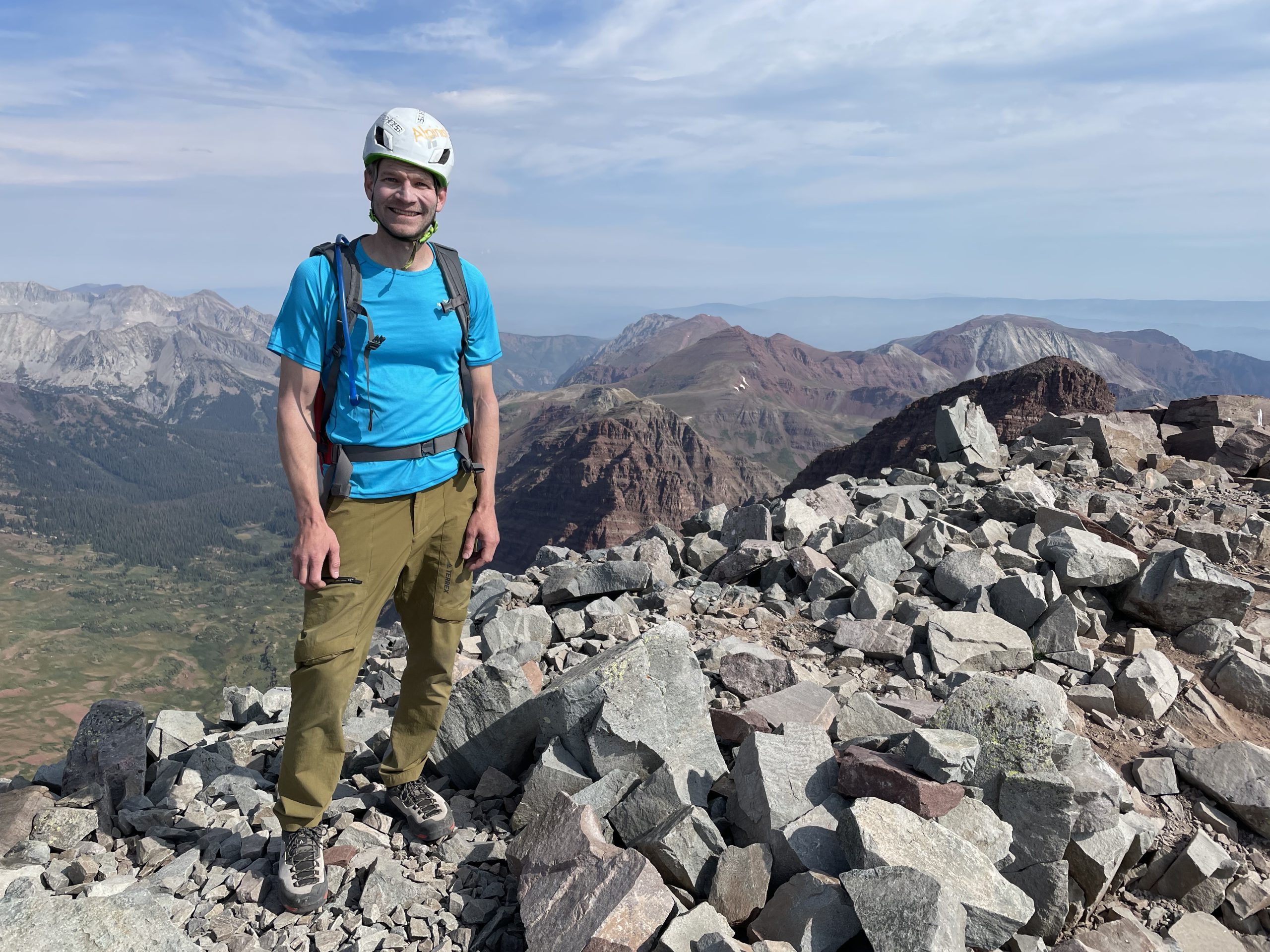
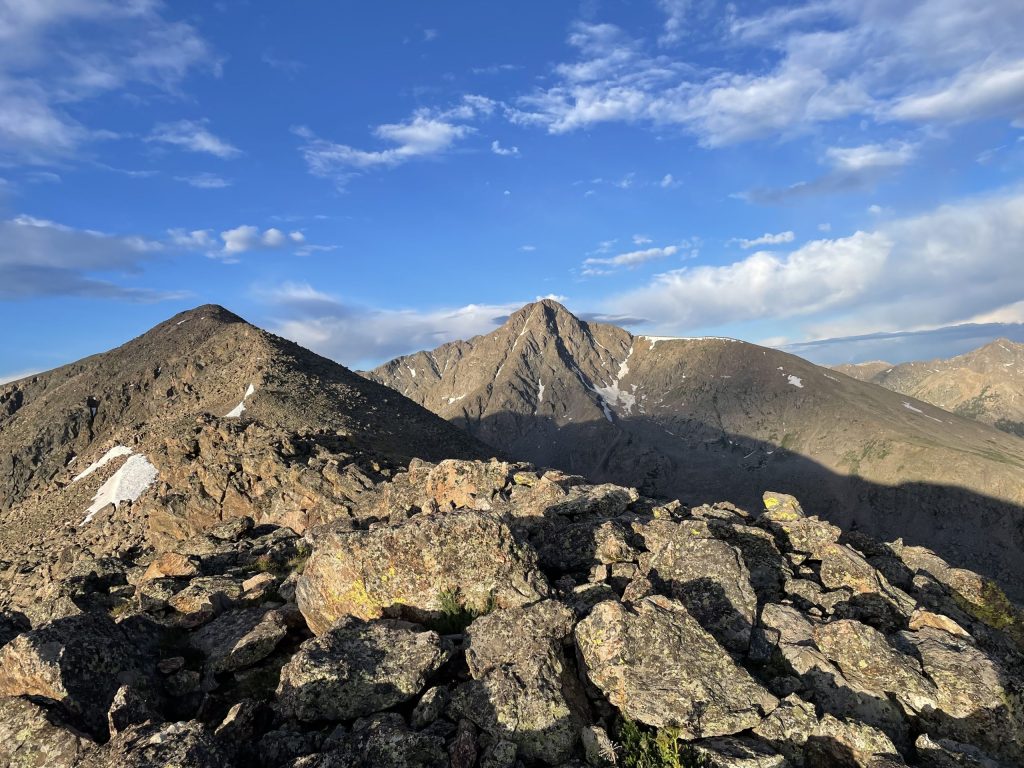
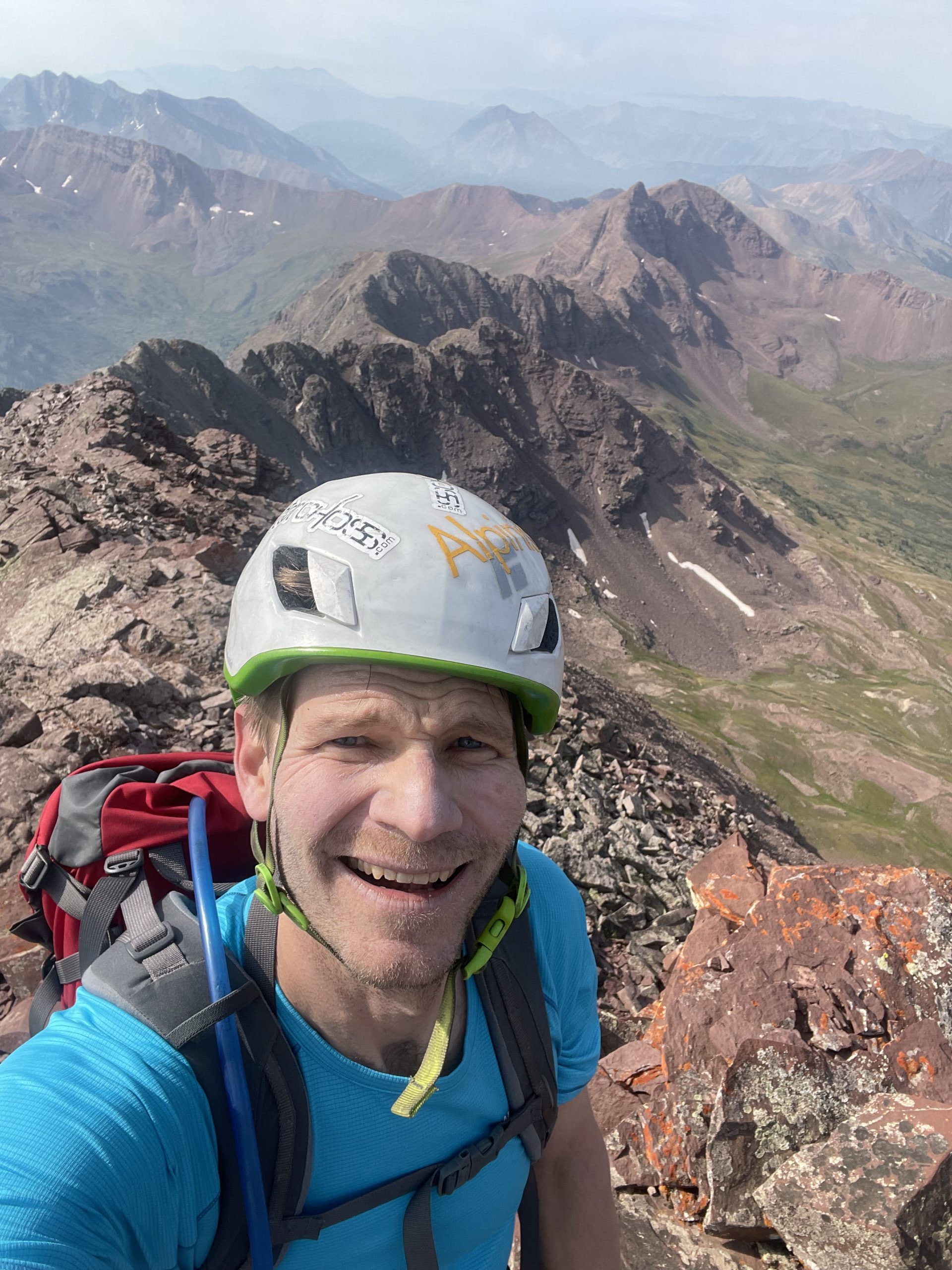
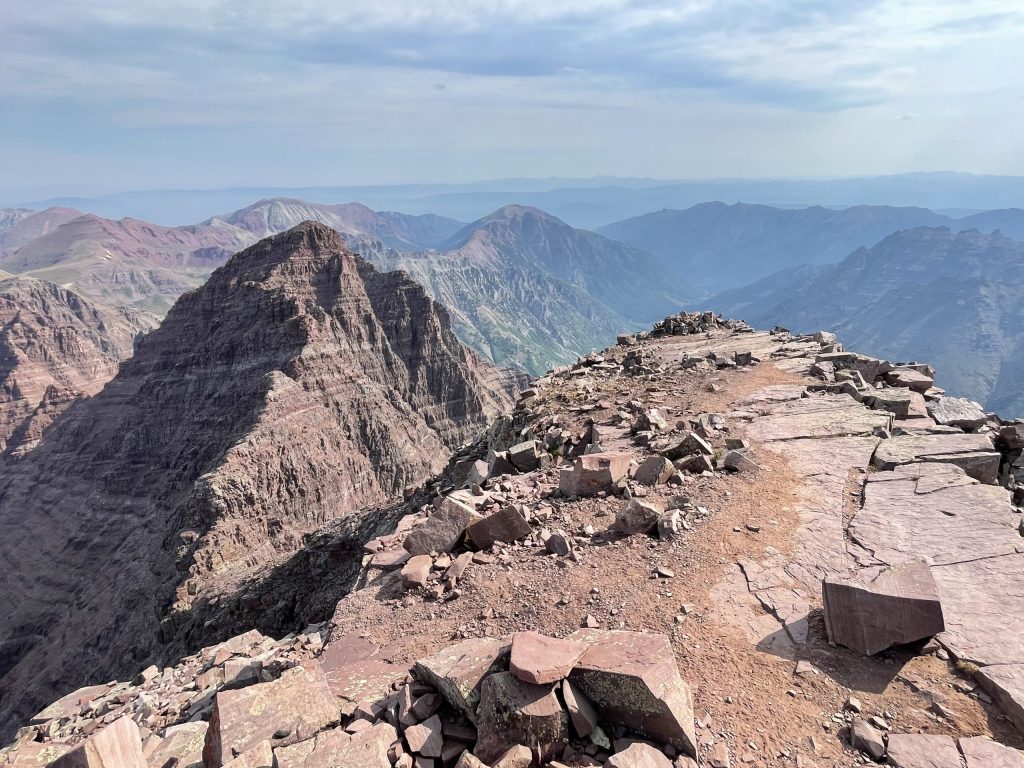
Since the Tetons are not very close to my home in western Colorado, I recently took a pair of the 2025 Technicians for a spin on the Halo Ridge on Mt. of the Holy Cross (14,005′). The loop covers about 15 miles, with several summits above 13,000 feet, culminating with Holy Cross. You then descend the regular hiking route on the North Ridge to East Cross Creek and go back over Halfmoon Pass (11,640′) to return to the car. More than half of the mileage is on talus up to Class 3. It is a beautiful tour that requires a steady, sure-footed pace.
The Technicians served me wonderfully. It wasn’t a given that the low-top suede shoes would. I preemptively swapped out the factory footbeds with Superfeet beds to give my arches added support for the long day. I was happy to discover that there was still enough room in the toe box for the thicker footbeds to fit comfortably. With technical shoes that require a more precise fit, the swapped footbeds sometimes result in my toes feeling too constricted.
My feet and ankles are creaky from decades of accumulated injuries. During my teens, 20s and most of my 30s, it almost didn’t matter what was on my feet. But in recent years I began carrying trekking poles and wearing high-top boots for protection against rolling a foot while hop-scotching through tipsy talus. Wobbly rocks, sand and snow are kryptonite for my ankles. The shoes delivered all I could ask for and I was still walking well enough when I returned to the van.
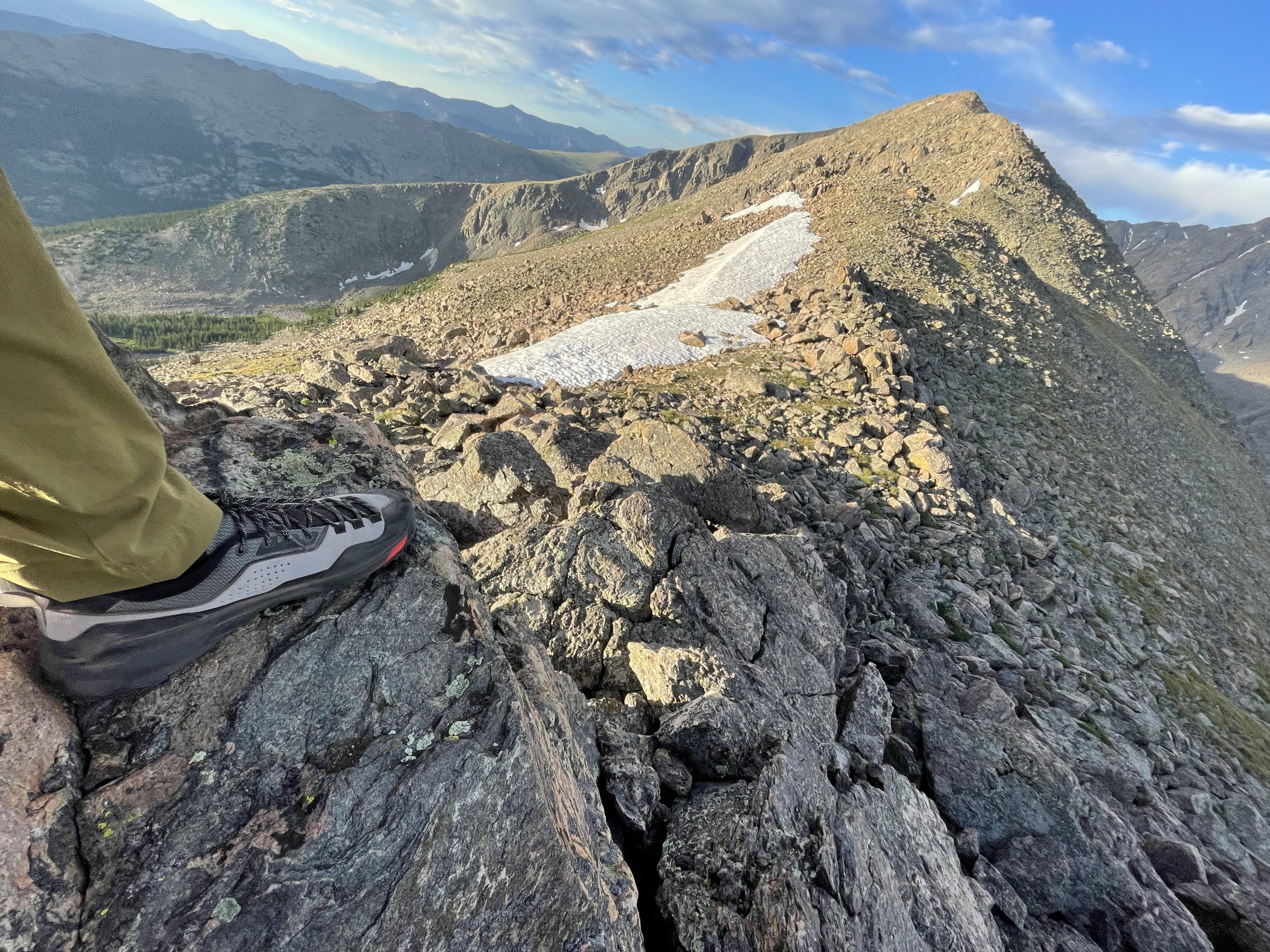
I found Black Diamond’s product description to be wholly accurate:
Durable and comfortable for a ten-mile approach, but precise enough to climb in technical and exposed terrain, the Technician Pro is the ultimate approach shoe built to take you from the car to the summit and back.
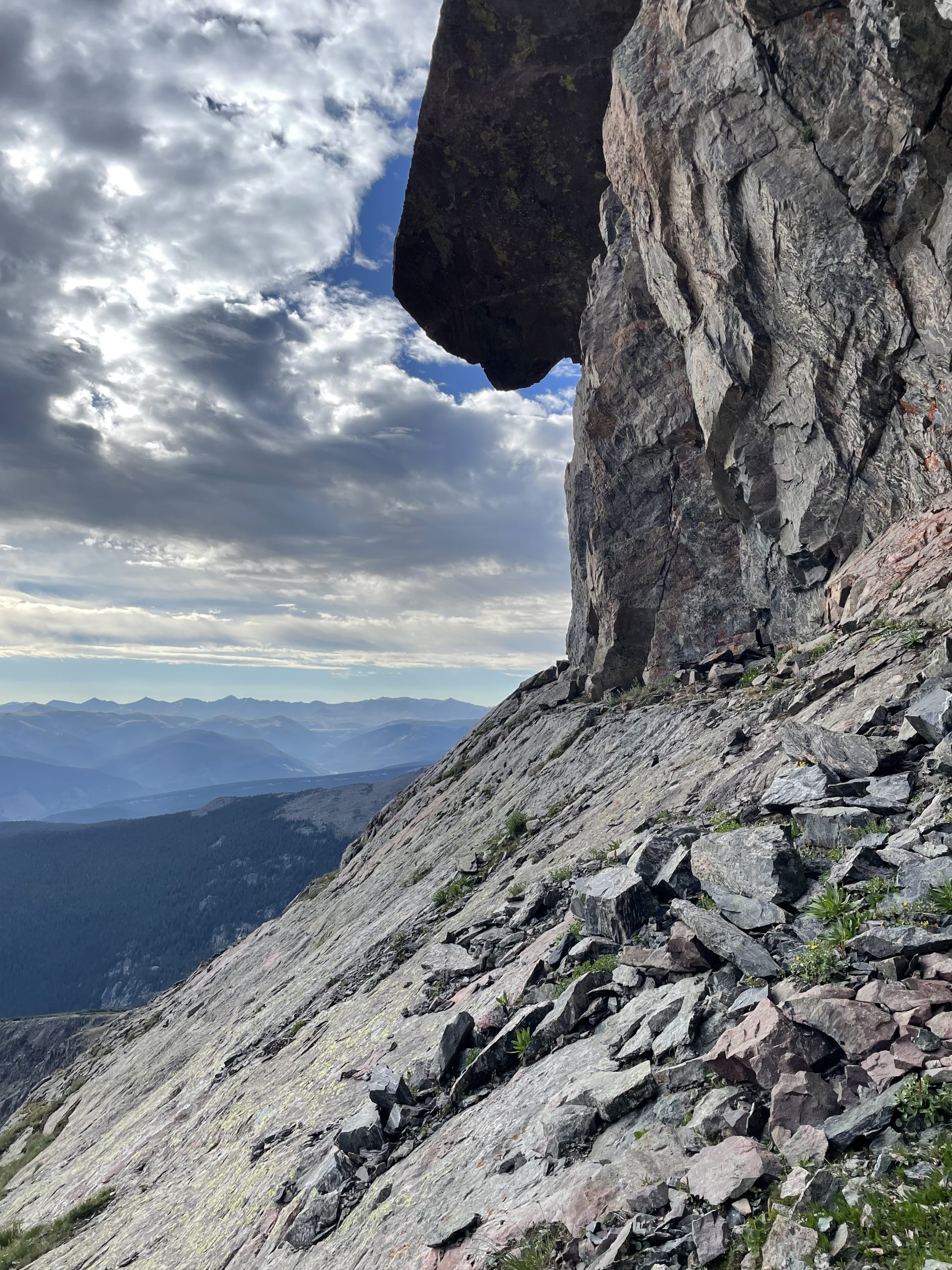
The technical crux on the Halo was Notch Mountain (13,237′), where you have to climb down and up the sides of the narrow couloir that splits the summit. I had to friction down steep, airy slabs with sand and loose rock; cross a dry gash of compact gravel, kicking my feet for purchase; and climb up and out the other side.
The cliffs on the opposing side are overhanging and about 200 feet tall, but, as the 1999 Gerry Roach Fourteener guidebook describes, there is a slender ledge on the east face that leads around an arete. Without any snow in the couloir, the easiest way to reach the ledge wasn’t straightforward. No matter—a clean face of black rock striped with veins of quartz beckoned. The 10-foot step was graced with exquisite edges no more than half an inch deep. I would get to enjoy a few moves of real climbing after all!
I assessed the commitment level: falling onto the unstable slope would not be an option. Yet I didn’t hesitate.
If anything, I was eager, like a kid about to devour a hunk of fancy Swiss chocolate. The moment I felt the firm, sticky-rubber bite onto the first toehold, my choice was confirmed. I stood, grabbed another delightful edge and brought my right foot up to the next one. The fine-grained rock was so clean and uniform that the holds were mostly camouflaged until my eyes zeroed in on them, one by one. I sequenced the sloping mantel move onto lower-angle rock, and all too soon I was on the ledge, longing for more.
The bifurcation around the dramatic cliff face felt like a secret passage. No more than 18 inches wide, the smooth shelf of pale stone contoured the cliff like a secret passage … I walked around the exposed arete to find a third-class ramp carpeted with green tundra and flowers. Beautiful! I wished for the day to go on and on like that, and it did. I enjoyed moving up and down the spiny ridge so much that day, I even went up and over some of the smaller camel humps that are otherwise easily avoided.
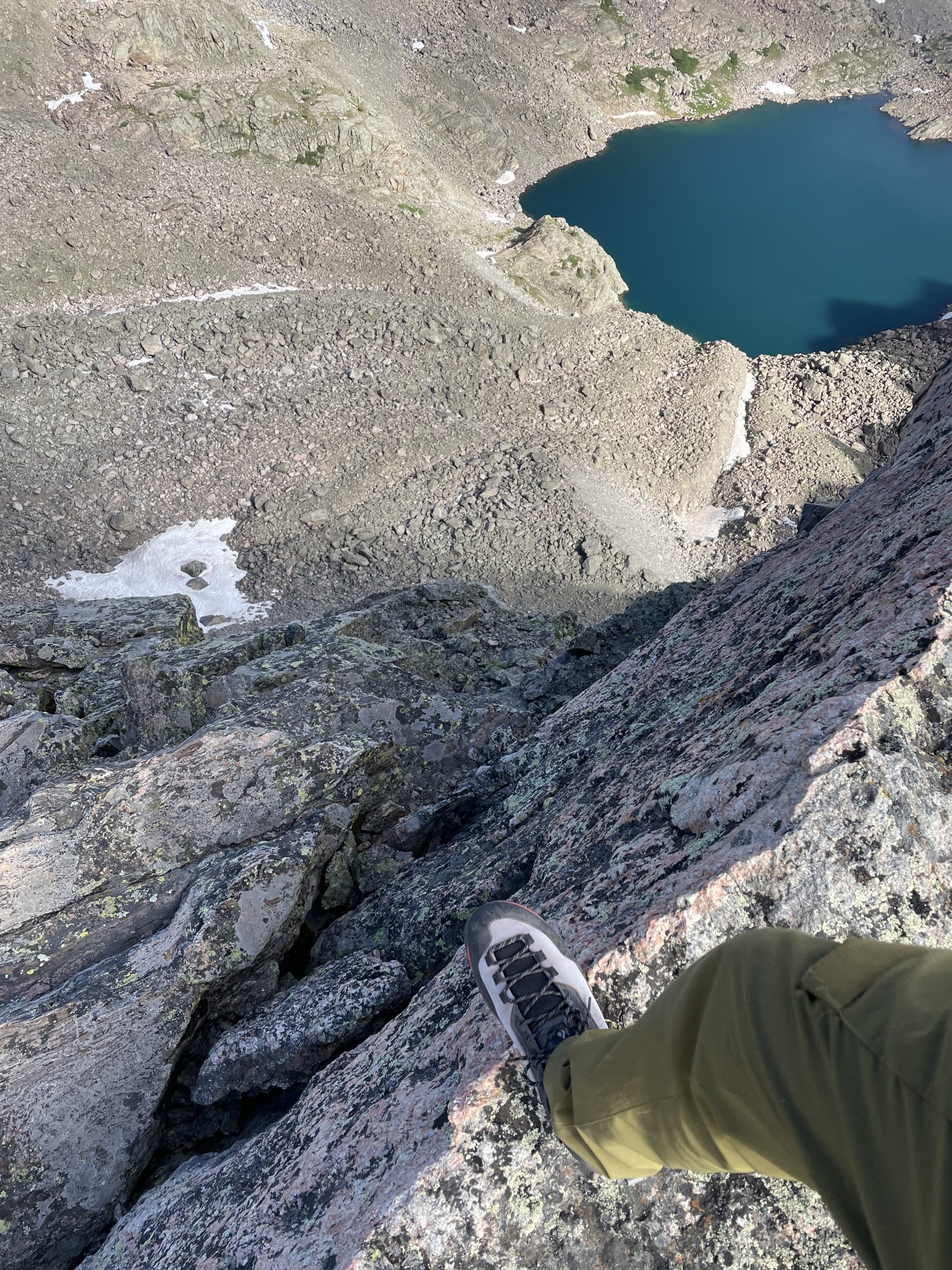

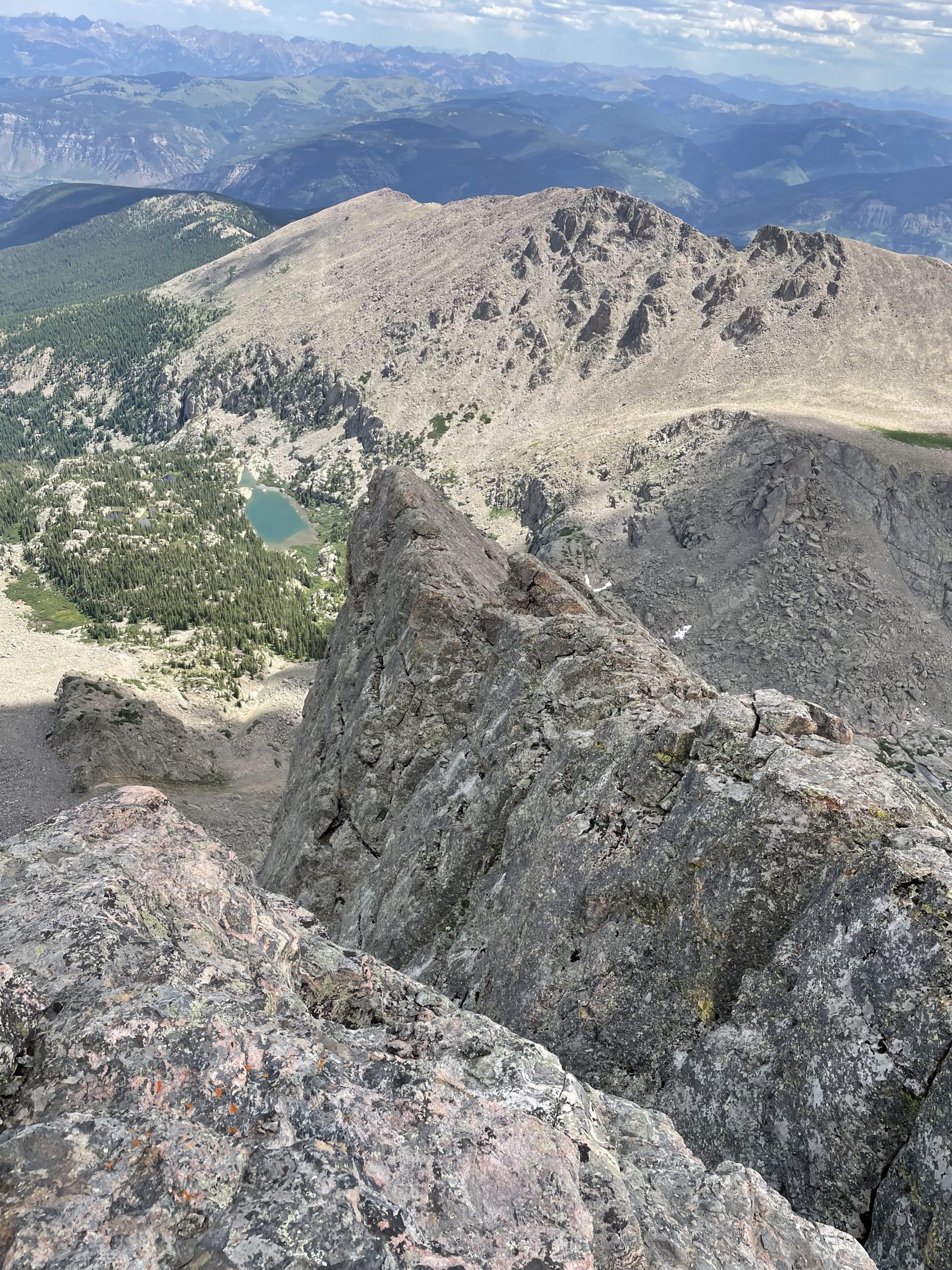
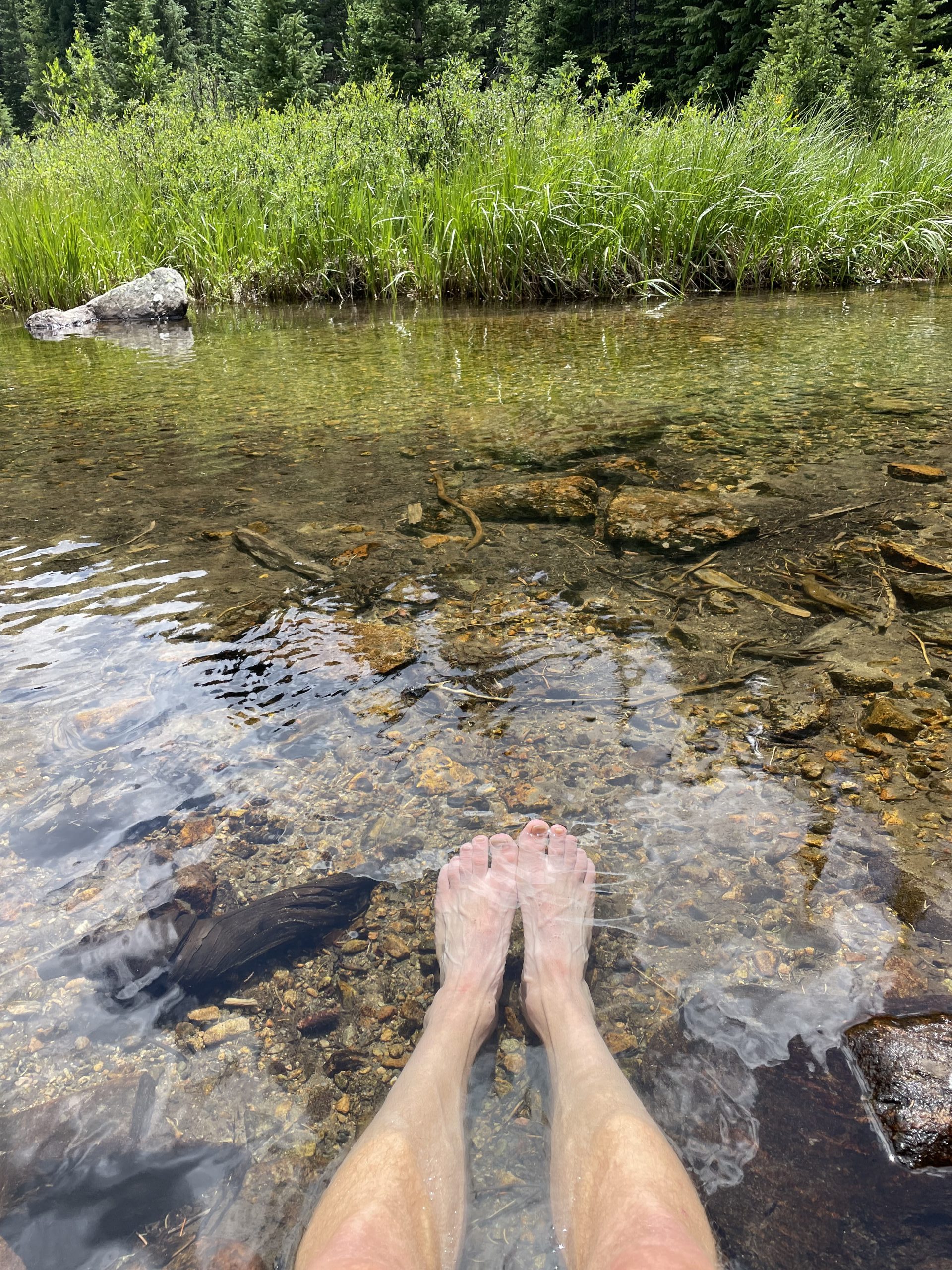
Since then, I’ve also used the Technician Pros on hikes to remote crags and other trails near my home. Just yesterday I wore them on the Maroon Bells Traverse (two summits above 14,000′). That 10-mile loop presents many Class 4 sections, and as usual, I spiced it up even more by climbing the direct ridgeline as much as possible, putting great confidence in the shoes’ ability to stick on small edges.
The shoes have gained my trust in their grip on various rock types and soil, and I’ve been surprised how comfy they are. And they are a reasonable weight, given their sturdiness, with a claimed weight of 428 grams per shoe (15.1oz), which appears to be accurate.
Relative to the overall rigidness of the shoe, the Technician Pro is sensitive at the toe, just where a climber needs it, while the rest of the shoe pads and protects well. I attribute that to what Black Diamond describes as a “refined toe box for edging precision,” a “hybrid super foam heel with 5mm drop” and “Vibram Mega Grip outsole, dual-density hybrid midsole, and an engineered TPU plate.” The hybrid foam cushions impacts to the legs and spine as well as my feet, while the TPU plate provides the torsional rigidity. I can stride across fields of pointy boulders and jam cracks as comfortably as I can face climb in these shoes. The rigidity and relative toe sensitivity also make the Technician Pros a decent option for aid climbing.
One more thing about the fit—I’m typically a US size 10 but I had to bump up to a men’s 10.5 to avoid having my big toes jammed into the front of the shoes. (It’s always a good idea to have a little space to absorb the inevitable toe-stubs that happen during a long day on the trail.) I noticed other reviews mention the tight sizing for the Technician as well.
Another factor in my perceived comfort of the shoe is that my feet don’t seem to overheat as much as they do in shoes made with Gore-Tex. I feel like many of the approach shoes I see on display racks these days are either super light and soft (sensitive with less support), or they are overkill on waterproofness and beefiness (at least for dry environments like Colorado). I think the Technician Pro’s suede upper—which has vent holes along both sides of the mid-foot—has a good balance between protection/durability and ventilation. There are waterproofing treatments for suede, of course, if that’s something you desire, though such treatments tend to affect the shoe’s texture and color.
The main complaints I’ve found online have to do with the heel fitting; the padding and cut of the rear cuff was restrictive for some people. One person labeled it an “Achilles [tendon] killer.” I have a narrower heel and a wide forefoot; with some shoes, I feel like my heel is swimming, but the BD fit me very well. I can imagine how a person with sturdier ankles/heels might not like it.
The Black Diamond Technician Pro has been around for several years. Based on photos and a 2020 Outdoor Gear Lab review that described them as “not terribly stiff nor supportive,” I’d say the design has come a long way. To me, it feels like BD might be hitting their stride with the latest iteration of the Technician Pros.
Pros: Shoes deliver good support as well as sensitivity for climbing performance. Suede offers durability and breathability. Toe box is roomy enough to accommodate non-factory footbeds.
Cons: The cuffs of the shoes can be very uncomfortable and restrictive for people who have bigger ankles/heels. Not waterproof. Only available in one color, Steel-Black.
Derek Franz is the editor-in-chief of Alpinist and has been a gearhead since he started climbing at age 12.